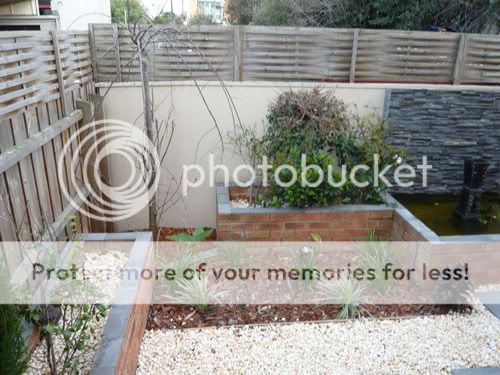
In the back corner garden there is a raised bed. Originally this bed housed two sorry camellias. Then I took out the camellias to put in some gardenias transplanted from another bed. They died too. So after ripping out the gardenias, I tried to think of what else to plant there, what shrub I actually cared enough to plant and water until it grew.
By then I had the habit. The addiction. I wanted to grow more food.
I thought, what's the harm? If I get bored, in the autumn when the veggies finish I can take them out and put in a shrub. It's the sunniest spot in the corner garden, I might as well take advantage of it.
And so, a bag of manure later, I had another veggie patch.
 To the left is a tiny pea just sprouting. It was actually too late to plant peas, they like the late winter and finish in spring, and by then it was late spring. But I wanted to try them anyway, and as a legume they draw nitrogen from the air and put it in the soil with their roots. That meant that even if they only made 2 pods of peas, the roots were still improving the soil for later veggies.
In the middle is a capsicum (bell pepper). I don't like them, but Tom does so I thought I'd try growing some.
To the right, not yet sprouted, are two pumpkin seeds.
Down the front of the bed I even squeezed in a row of carrots. It's great, they came on "carrot tape", a strip of paper with the seeds implanted in them, so you don't have to worry about planting them all evenly and at the right depth ... you just plant the tape!
Now, what's that funny black trellis for, you ask? And how can I possibly fit all of those veggies in one narrow bed? Why, I'm glad you asked.
 Here's the bed a few weeks later. As you can see, the peas have shot up and are just wrapping their little tendrils around that lattice.
As to the pumpkin, I planted two seeds and both came up, so I thought I'd let them both grow. How can they possibly fit, you ask? Why, I'm glad you asked.
 Did you know that pumpkin is a vine ... and in fact it loves to climb? I didn't either until I did a bit of research. It's latched onto that lattice and it isn't looking back!
 In fact they've grown so much I added some more trellis at the top. One or two vines look like they're going to grow over the front of the bed, and that's OK too, there's plenty of room for them to spread out there.
The carrots are doing OK too, you can see them at the left side of the bed, they're that fuzzy green stuff. The ones on the right got shaded out by the pumpkin, and in fact the capsicum is quite shaded too. Today I trimmed a few pumpkin leaves to give the capsicum a bit more light.
Meanwhile, a little about the type of pumpkin. I love pumpkin, Tom hates it, so I wanted to grow a small variety that would store for a long time, but when I wanted to eat it I could eat one by myself. So after lots of searching, I found a variety called a Potimarron, which literally means pumpkin-chestnut (supposedly from its flavour).
 This is what a Potimarron embryo looks like. Pumpkins make both male and female flowers, and the female flowers are easily recognized because they have a tiny baby pumpkin at the base.

And this is what the flower looks like, big and beautiful like a showy yellow summer dress. And there's that baby pumpkin again, just aching to grow!
By then I had the habit. The addiction. I wanted to grow more food.
I thought, what's the harm? If I get bored, in the autumn when the veggies finish I can take them out and put in a shrub. It's the sunniest spot in the corner garden, I might as well take advantage of it.
And so, a bag of manure later, I had another veggie patch.
 To the left is a tiny pea just sprouting. It was actually too late to plant peas, they like the late winter and finish in spring, and by then it was late spring. But I wanted to try them anyway, and as a legume they draw nitrogen from the air and put it in the soil with their roots. That meant that even if they only made 2 pods of peas, the roots were still improving the soil for later veggies.
In the middle is a capsicum (bell pepper). I don't like them, but Tom does so I thought I'd try growing some.
To the right, not yet sprouted, are two pumpkin seeds.
Down the front of the bed I even squeezed in a row of carrots. It's great, they came on "carrot tape", a strip of paper with the seeds implanted in them, so you don't have to worry about planting them all evenly and at the right depth ... you just plant the tape!
Now, what's that funny black trellis for, you ask? And how can I possibly fit all of those veggies in one narrow bed? Why, I'm glad you asked.
 Here's the bed a few weeks later. As you can see, the peas have shot up and are just wrapping their little tendrils around that lattice.
As to the pumpkin, I planted two seeds and both came up, so I thought I'd let them both grow. How can they possibly fit, you ask? Why, I'm glad you asked.
 Did you know that pumpkin is a vine ... and in fact it loves to climb? I didn't either until I did a bit of research. It's latched onto that lattice and it isn't looking back! In fact they've grown so much I added some more trellis at the top. One or two vines look like they're going to grow over the front of the bed, and that's OK too, there's plenty of room for them to spread out there.
The carrots are doing OK too, you can see them at the left side of the bed, they're that fuzzy green stuff. The ones on the right got shaded out by the pumpkin, and in fact the capsicum is quite shaded too. Today I trimmed a few pumpkin leaves to give the capsicum a bit more light.
Meanwhile, a little about the type of pumpkin. I love pumpkin, Tom hates it, so I wanted to grow a small variety that would store for a long time, but when I wanted to eat it I could eat one by myself. So after lots of searching, I found a variety called a Potimarron, which literally means pumpkin-chestnut (supposedly from its flavour).
 This is what a Potimarron embryo looks like. Pumpkins make both male and female flowers, and the female flowers are easily recognized because they have a tiny baby pumpkin at the base.
And this is what the flower looks like, big and beautiful like a showy yellow summer dress. And there's that baby pumpkin again, just aching to grow!


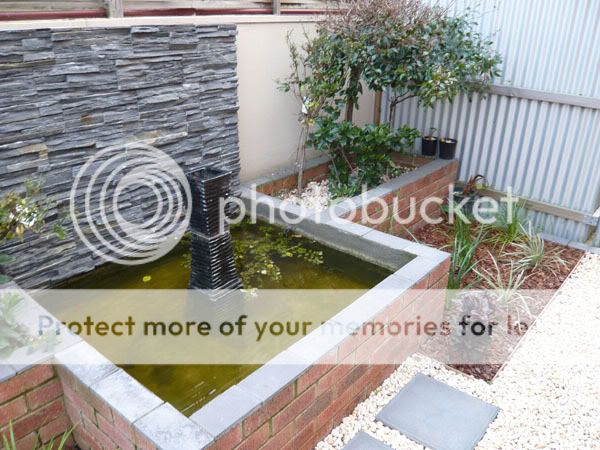
 And the dead cherry tree? It was so far gone you could pull it would just by rocking it in the dirt and hacking at the tap root with a shovel. I went on a field trip to the Dandenongs to a nursery that specializes in Japanese maples and found this little darling.
 I did have a lot to work with though. Look at this fig tree - it's almost three meters tall! It must be over twenty years old and beautifully pruned into a strange and lovely shape.

